
KIDS
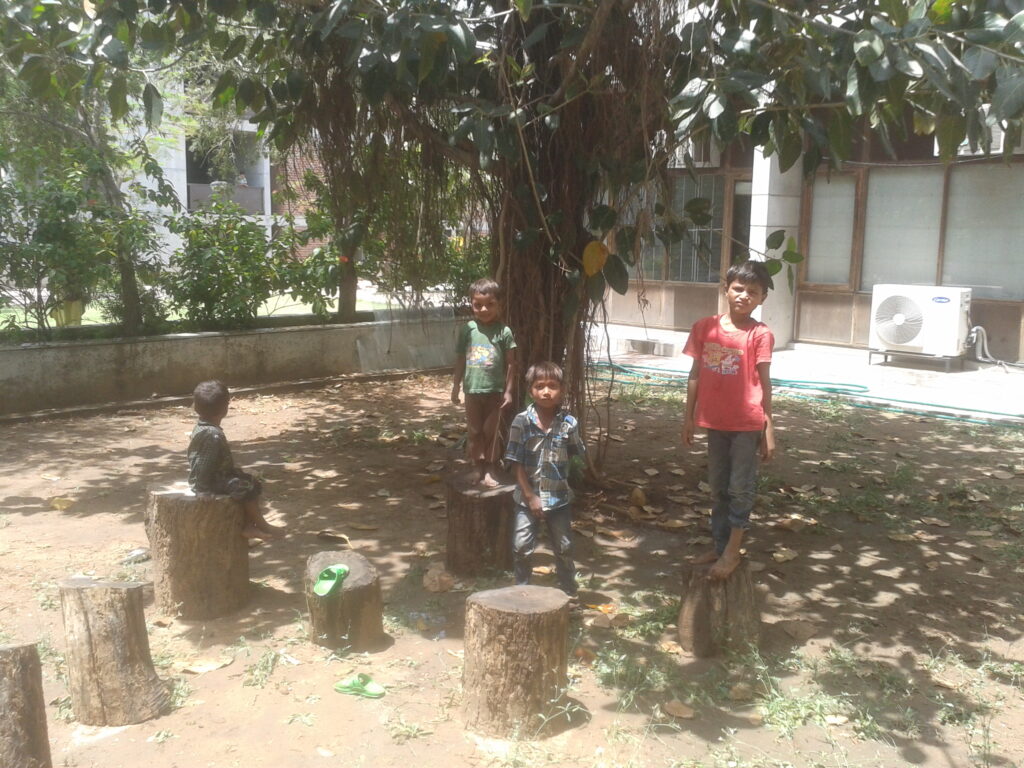
Kids Children playing on IIM, Ahmedabad Campus, behind CIIE (now IIMA Ventures) building, April 28, 2015 I am on a flight from Pune to Ahmedabad. For some reason I am among the first set of people to get on to the plane. Just as I am settling down in my window seat, I hear giggles and some chatter. When I look up, I find three little girls almost running and coming towards my row of seats. The eldest one, who was about 10-12 years, has all the boarding passes. She stops when she reaches my row and says triumphantly: “Aa che!” It turns out that her seat is 20D on the other side and her younger sisters have seats next to me. The youngest one, who I later found out, is six years old, is next to me in the middle seat. The sister elder to her has the aisle seat next to her. The eldest sister makes them sit on their seats and settles down in hers. But she is too excited to sit and gets up every now and then and looks expectantly towards the front of the aircraft. They are modestly dressed and have very cheerful faces. Suddenly, the eldest one gets up again from her seat looks at her sisters and says with joy and in clear English: “Finally, here we are! First time on an airplane!!” I feel a bit foolish as I realize that I had almost begun the process of ‘slotting’ them! They are super excited and start exploring everything around them. The two elder ones take out everything that is in the seat pockets in front and start to read including the safety instructions. The youngest one, though curious, seems subdued. Boarding was taking time and the eldest one will once in a while stand up and look towards the front of the aircraft saying: “kyan rah gaya aa loko?” Eventually she sighted the persons she was waiting for and waved vigorously saying ‘here here’! And the parents of the three kids arrived. The eldest one told them their seat numbers but promptly sat on her father’s seat at the window. The middle sister was crestfallen as she had the aisle seat! I offered her my seat at the window and she was ecstatic and thanked me several times! It was time to take off and the two kids next to me struggled with their seat belts. I helped both of them with their belts and also told them how it works. Their parents on the other side looked on with an amused smile. The middle one in the window seat tightened her seat belt and figured that she has got it right and therefore focused on the scene outside the window. The youngest one in the middle seat next to me was fascinated by the belt and tried it 5-6 times – buckling and unbuckling – to ensure that she got it perfectly. She then looked up at me and said very sweetly: “Thank you”! As the aircraft moved, the kids on the window seats were very excited. I persuaded the middle one to let their youngest sister also to see a bit. The take-off was so exciting for them but pretty soon the youngest one got satiated and leaned back on her seat to see what else she can do. She focused on the safety instruction card slowly reading the words aloud. She got most of them right. Her older sisters were enjoying the magazine. Both of them were quick to find out about the eatables available on the flight and exchanged notes across the aisle. They were not able to agree on what should be eaten!! They eventually decided to buy some sandwiches and mango juice. The youngest one was not very keen to eat anything as she was not feeling too well. Her mother gave her a packet of namkeen and the first thing she did was to ask me if I want some! Her mother watching all this felt quite nice and proud; a sense of achievement which I could immediately relate to. The kids soon lost interest in the happenings outside the widow. The elder two went back to the magazine to find something interesting. The youngest one did not share that curiosity. She was more interested in things around her. Checked the belt again, showed me the push button on the seat and asked: “What is this?” And I showed her how it worked to recline her seat. Her focus then shifted to the buttons ‘above’ the seat! She pointed those to me without asking anything as if it was the next obvious question for me to answer. I showed her how one of the buttons provides light for reading and told her that the other one is to call the airhostess if we need anything. She did not look convinced so I pressed the button and looked at her. She smiled at me as if saying ‘Let’s see what happens!’ After a while when the airhostess arrived, I asked her to get some water for the little one. As she left to get water, she asked: “How did you know that I wanted water?” I said, I didn’t. Just asked. She did not seem convinced and drank the whole glass of water. She was really thirsty. I asked her about her school and was told that she was in I-D in DPS. Her sisters were in different schools. I could see that her parents were quite amused by the interaction between us and gave me wide smiles through-out the flight. While the captain was announcing that the cabin crew should get ready for arrival, my little co-passenger was reading what was written on the seat in front of her. She struggled a bit with some of the English words like ‘fasten’ in the sentence PLEASE FASTEN YOUR SEAT BELT WHILE SEATED. I do not know if she figured what the life vest under
Remembering My Grandparents
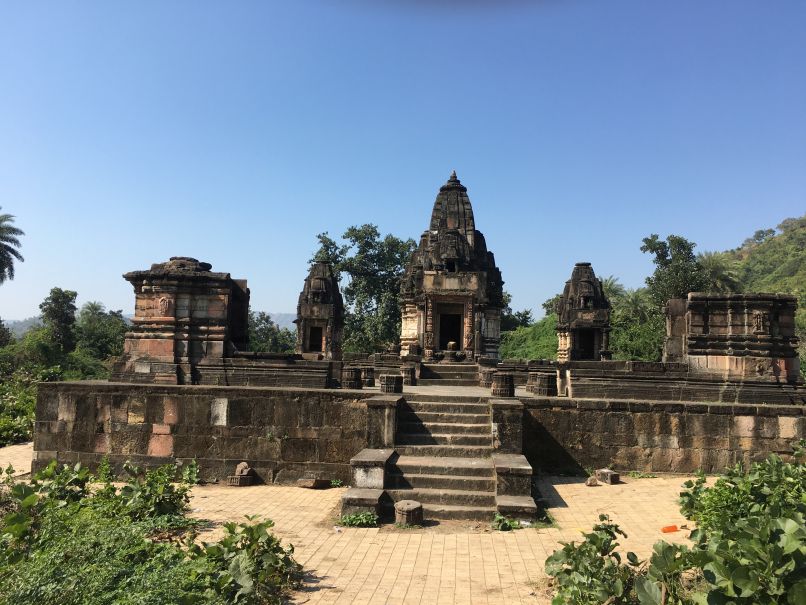
I was quite close to my grandparents. By virtue of being the eldest of the four grandchildren (and being a boy!), I not only received a lot of affection but also got more opportunities to interact with them. Throughout my childhood days they lived in Agra where my grandfather practiced as a lawyer after a long stint with the local administration (collectorate). Most of my summer vacations then were spent in Agra. I often went there alone as I was considered to be old enough to travel independently. I enjoyed those days tremendously with all the attention showered on me. They moved in with us in Jaipur around the time I joined college. It was nice to have them despite the intermittent clash of generations. I realize today that the process of getting to know my grandparents is an ongoing one that still continues after so many years of their passing away. Lakhena Temple ruins, Polo Forest, Vijaynagar, Gujarat, India. November 16, 2020. In Agra my grandparents lived in a locality that was vacated by people who migrated to Pakistan at the time of partition. In fact, the house where they stayed was arranged for my grandfather by the local administration as he was involved in the allocation of houses to those who came from the other side of the border. Someone was needed in the vicinity to supervise things. They lived in the same house on rent till they moved to Jaipur. Part of the house was used as a shoe factory before partition. This part was never used for living as it had no ventilation or light. Even in the 1970s when we ventured into these dark rooms as brave kids, we would find firmas (shoe-lasts) lying around. My grandfather rarely talked about those days except for saying that they were some of the most difficult days for him during his life in the local administration. Many people who were allocated houses in that locality became my grandfather’s lifelong friends and visited us very often. I do not remember a single instance of their discussing the trauma of partition while I do remember a few occasions when they laughed about the confusion of those times. My grandmother was a very religious person and a great believer of Hindu religious customs. Not only were all the religious festivals celebrated with gusto, the morning puja (worship) and the evening aarti (incense or light offered to deity) were part of her daily routine. As kids we were not required to join her in the morning puja but singing along with her at the time of the aarti with folded hands and closed eyes was mandatory. As we grew older, we could avoid active participation in the aarti but she felt very good if we did join her. While she did not mind going to a temple once in a while, my grandmother’s God essentially resided in the house. As she grew older, she spent more and more time with the prayer beads, reciting Ram naam (praying for God Ram) My grandfather was also quite religious, but less ritualistic. He never joined the evening aarti or the morning puja and I do not remember him ever going to a temple. After the aarti was over, my grandmother always brought the diya (lamp) to bless him with it. This he accepted with reverence. Every day he wrote 786 in Arabic several times while reciting (almost mumbling) the kalima. (declaration of faith in Allah and Mohammed as his messenger). One often saw him with the tasbeeh (rosary) reciting aayats (verses from the Holy Quran). In Agra a fakir (religious ascetic) from a nearby dargah (tomb of a Muslim saint) visited him often. I never understood what they discussed but he often brought a taveez (amulet or charm) which my grandfather tied on his arm or gave to his brother who was ailing. At times money changed hands for a special dua (prayer or invocation) at the dargah. My grandmother never complained about the non-participation of my grandfather in her everyday pujas but was not very happy with the visits of this fakir as she was not convinced of his genuineness. The only thing common between the daily religious routines of my grandparents was the prayer beads that they shared. Once in a while both of them would also say the same phrase aloud: Tu karam kar de to beda paar hai! (If God is generous, then all is well). Tomb of the Sufi saint and poet, Rumi. Konya, Turkey. June 7, 2024. I understand that they had inherited this phrase from my great grandfather who was a reasonably well-known Sufi poet and was invited to Ajmer every year at the time of the Urs (annual festival at the Sufi saint Khwaja Garib Nawaz dargah). Despite these significant differences in the daily religious routines, my grandparents actively participated together in two pujas during the year. One was Laxmi puja at the time of Diwali and the other was kalam-dawat ki puja (worship of pen and inkpot) at the time of bhai dooj. In many respects the latter was much more elaborate in our household. Everybody brought their writing instruments along with inkpots (till they were in use). Kalavas (sacred threads) were tied to each of these and all of us were expected to write something with them on a large sheet of paper and then put some kumkum (red turmeric powder) and akshat (rice). Typically, my grandfather wrote something in Arabic, Urdu or Persian. My grandmother almost always wrote Aum Namah Shivai (I bow down to Lord Shiva). Depending on who else was around, other elders in the household wrote different things in English, Hindi, Urdu or even Sanskrit. As small kids we were satisfied with signing our names with a flourish. But as we grew older, we also experimented. On different occasions, I remember writing lines from Tagore’s ‘where mind is without fear’ (Visit Here) and even a few from